Humanoids · October 10, 2026 · 3 min
BYD’s humanoid shows up in a patent, not on a stage
A newly published design patent shows a smooth-headed, black-and-white biped that matches the “Xiao Di” robot BYD teased in July. A design patent covers looks only, and there is still no launch.
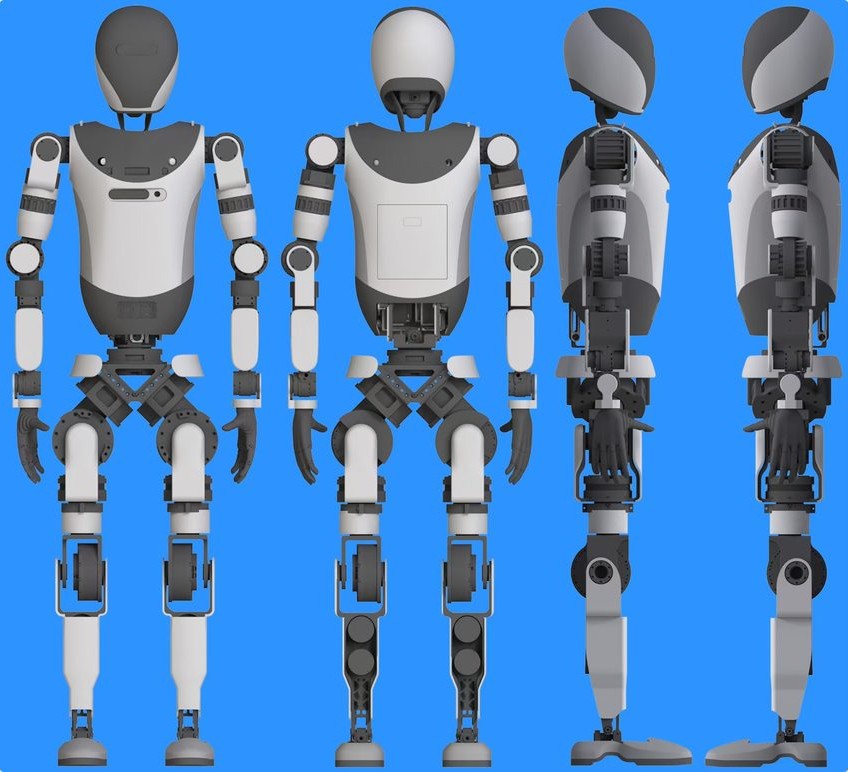
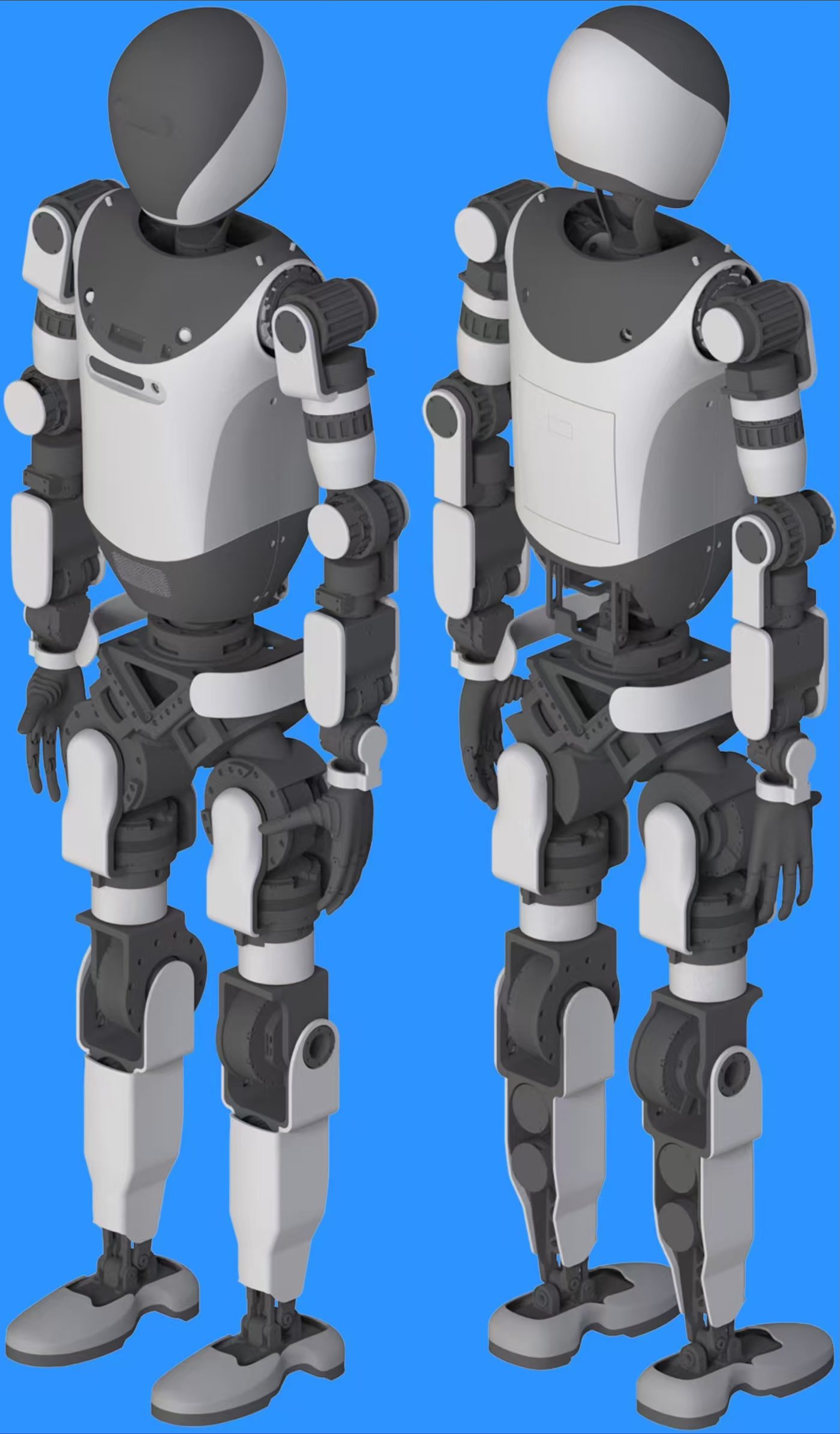
The world’s best-known electric carmaker has been circling humanoid robots for years. This month we got the clearest picture yet of what BYD’s own robot might look like, and it arrived through paperwork rather than a press event. China’s patent office published a BYD design patent on October 9 for what the filing calls an embodied AI robot. CarNewsChina reported the drawings the following morning.
What the drawings show
The robot is drawn in black and white. It has a rounded head with no face screen, and visible joints through the torso, arms and legs. The filing describes a machine meant to walk, keep its balance and interact with people, with service, education and factory settings named as uses. That is a broad list, and it fits the general-purpose ambitions most humanoid makers now claim.
The Xiao Di connection
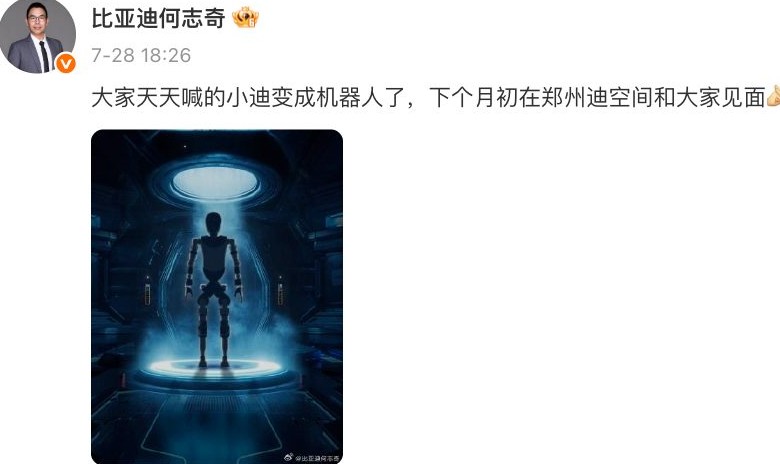
The silhouette lines up with Xiao Di, or “little D,” the humanoid that BYD executive vice president He Zhiqi teased on July 28. He posted a shadowy image of a robot and said the machine people kept asking about would meet them in early August at Di Space in Zhengzhou. BYD has not confirmed that the patent drawings are the production Xiao Di, so the match is a strong resemblance, not an official link.
Some numbers are already attached to the Xiao Di name, though they come from earlier disclosures, not from this filing: a height of 1.61 meters, a weight of 58.5 kilograms, 31 degrees of freedom, and a hand that can return to the same position within about a millimeter. For comparison, Unitree’s standard H2 is listed at 182 cm and about 70 kg with the same 31 degrees of freedom, which would make BYD’s robot noticeably smaller. You can size up other humanoids on our humanoids page.
What a design patent is, and is not
It helps to be precise here. A design patent protects how something looks. It says nothing about whether the robot works, how well it walks, what software runs it, or when it will ship. BYD told Chinese media in late July that it planned an August showing. As of this article, there has been no product launch, so the patent is best read as a marker of intent.
A long runway inside BYD
The patent sits on top of a program that has been building quietly. BYD formed a robotics research team in 2022. It invested in AgiBot, the Shanghai humanoid maker, in August 2023, and took a stake in Percibot in April 2025. It has also let UBTECH’s Walker S1 handle materials at its Changsha plant, which gave BYD hands-on experience with someone else’s robot on a real production floor.
Executives have described a modest first use for their own machine: two or three robots in dealerships, greeting customers and walking them through a car. That is a far cry from replacing factory workers, and it is a sensible place for a carmaker to start, where a robot’s job is mostly to impress and inform.
Why carmakers keep entering humanoids
BYD is not the first carmaker in this race. Tesla’s Optimus is the best-known example of an automaker building its own humanoid, and the logic is easy to see: carmakers already work with batteries, motors and sensors at scale. BYD has taken a two-track approach, backing outside humanoid companies and testing a partner’s robot in its own plant while it develops a machine of its own.
What to watch
The next real signal will be a working robot shown in public, ideally doing something more than standing under a spotlight. Until then, the patent tells us BYD is serious enough to protect a design, and that the robot it teased in July still has not formally arrived.