
Business · November 6, 2026 · 5 min
Serve already runs 2,000 sidewalk robots. Now it wants to sell the plumbing that keeps them online
On November 5 the delivery company launched Physical AI Services: a connectivity link for field robots, a curator for rare training moments, and a sidewalk data catalog. Bedrock Robotics is a launch customer. Food delivery stays. The new product is the stack around the robot.
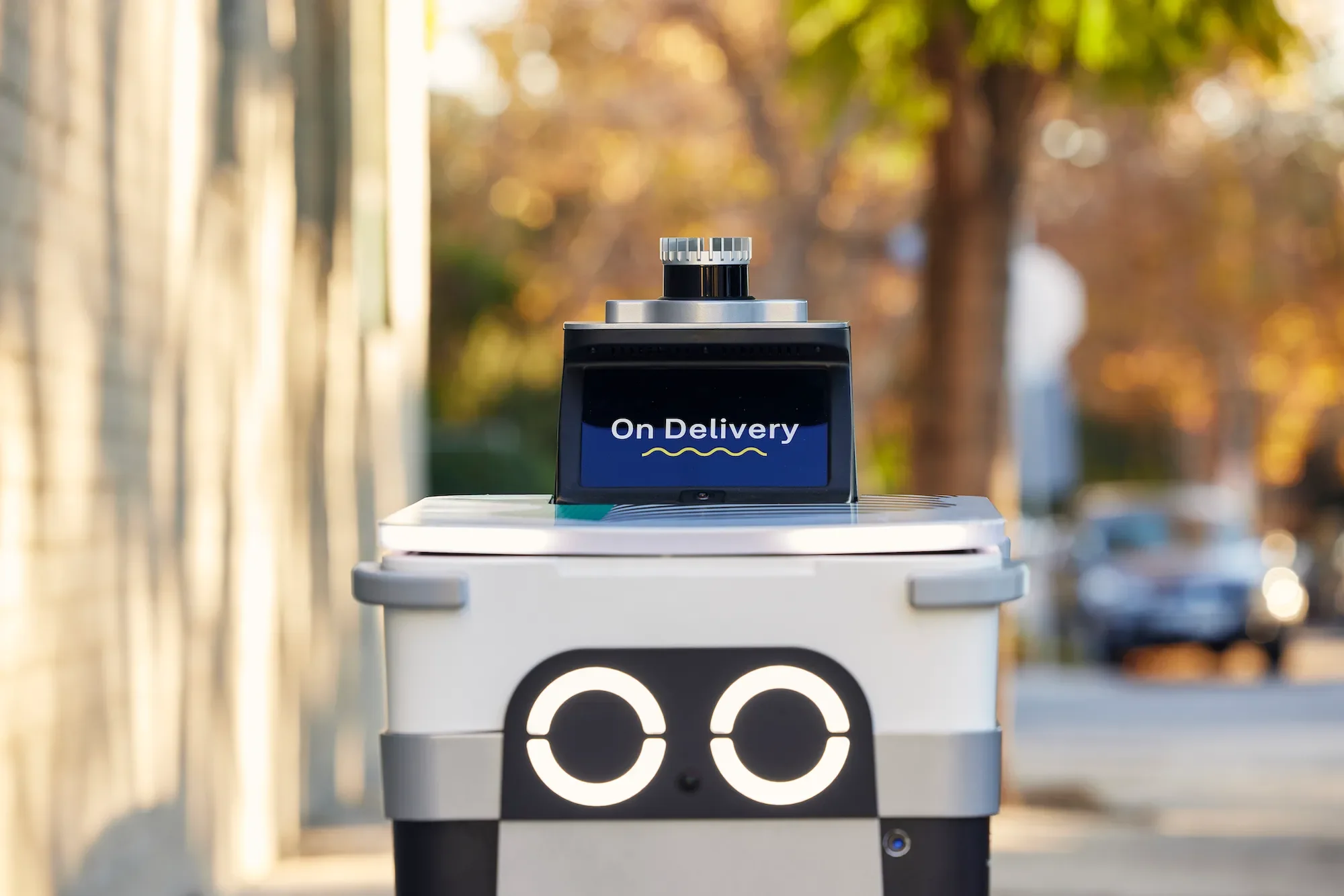
Most robot companies sell machines. Serve Robotics just started selling the invisible layer that keeps a fleet connected, learning and useful after the machine leaves the factory. On November 5 the Nasdaq-listed company (SERV) introduced Physical AI Services, a business line that packages tools Serve built for its own sidewalk delivery robots and hospital robots, and offers them to other teams building physical AI.
That is a different story from another cute delivery bot photo. It is a bet that the hard part of robotics at scale is no longer only the chassis. It is the link back to models in a data center, the triage of real-world video, and the data that teaches an AI what a messy human street looks like.
Three products, one idea
Serve Link is the connectivity piece. As more robot intelligence moves off the vehicle and into data centers, machines still need a dependable pipe for monitoring, exception handling and model updates. Serve says Link is built for unreliable networks and already supports Wi-Fi, LTE, 5G and satellite. Serve Data Curator is the filter. Fleets generate far more footage than any team can watch, so the tool is meant to surface the rare edge cases that actually improve a model. The third offering is a foundation-model data catalog drawn from Serve’s own sidewalk runs, including terrain and infrastructure examples from real city sidewalks.
Launch customer Bedrock Robotics, which builds autonomy for heavy construction equipment, is using Serve Link across those network types. Serve also says Physical AI Services already touches thousands of vehicles across a dozen industries, including construction, mining and autonomous trucking, plus Serve’s own delivery fleet. Alongside the launch, Serve said it is working with T-Mobile to put AI compute closer to robots in the field.
"Building a robot is only the beginning. Keeping thousands of them connected, learning and improving requires another layer of technology," said Ali Kashani, co-founder and CEO of Serve Robotics. "We’ve put that technology to work in our own fleet. Now we’re opening it to other companies so they can focus on what their robots do, rather than rebuilding the systems around them."
Why Serve can sell this now
Serve spun out of Uber’s Postmates acquisition in 2021 and went public in 2024. It says it has deployed more than 2,000 robots in over 40 cities and 27 hospitals, reaches about three million people, and supports delivery for more than 4,000 restaurants in the U.S. and Australia. In 2026 it acquired Diligent Robotics, which moved the company indoors into hospital service robots. The delivery business is still growing, though Kashani has described a partner mix that is shifting away from Uber toward DoorDash and Wonder.
Kashani framed the move as an "AWS moment": build the full stack yourself while the market is young, then open the pieces others keep reinventing. That only works if you already run a messy, public fleet. Sidewalks and hospital halls force the connectivity and data problems that a lab demo never sees.
How this sits next to other fleet plays
Fleet software is not new in robotics, but the packaging is. Agility Robotics, now trading as AGLT after its Nasdaq debut path, sells Digit with Agility Arc for managing warehouse fleets inside customer operations. That stack is tied to Agility’s own humanoid and to buyers like GXO, which added two more Digit buildings. Serve’s pitch is the opposite shape: keep your robot brand, buy the connectivity and data layer from a company that already learned sidewalk chaos the hard way.
FieldAI is another neighbor on our map, selling foundation models and autonomy software rather than a single famous body. Serve is closer to infrastructure than to a general robot brain. The interesting question is whether construction, mining and trucking buyers prefer a shared pipe and data service, or keep building private fleets end to end.
What to watch
Company-reported scale is not the same as revenue disclosed by product line. Serve has not published how much of its business Physical AI Services is expected to become, or pricing for Link, the curator or the catalog. The proof will be repeat customers beyond Bedrock, clear uptime numbers for Link in harsh sites, and whether the sidewalk catalog helps models that never deliver burritos.
Our take
Delivery robots made Serve famous. The quieter asset was always the operating system around them. Opening that stack is a grown-up move for a public robot company, and a signal that physical AI is starting to look like other infrastructure markets: bodies still matter, but pipes and data decide who scales. We will track Serve next to Agility, FieldAI and the other fleet stories on our humanoids page and company directory. Roles in robot connectivity, autonomy and data are on our jobs board.