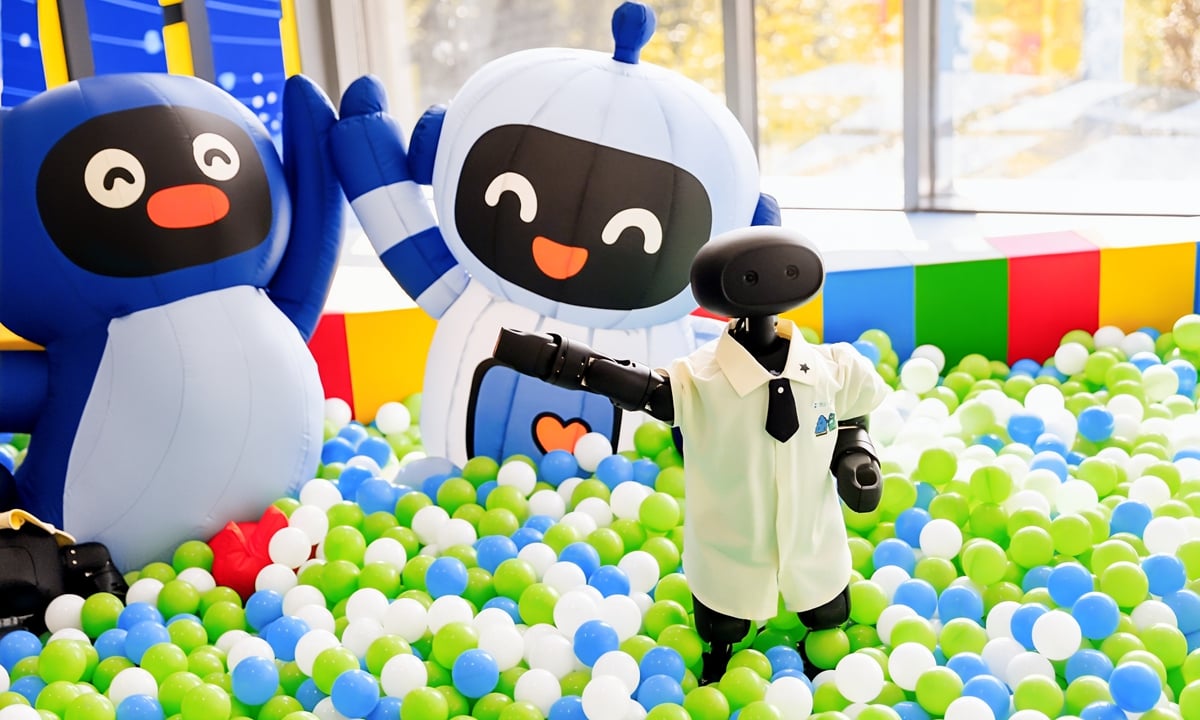
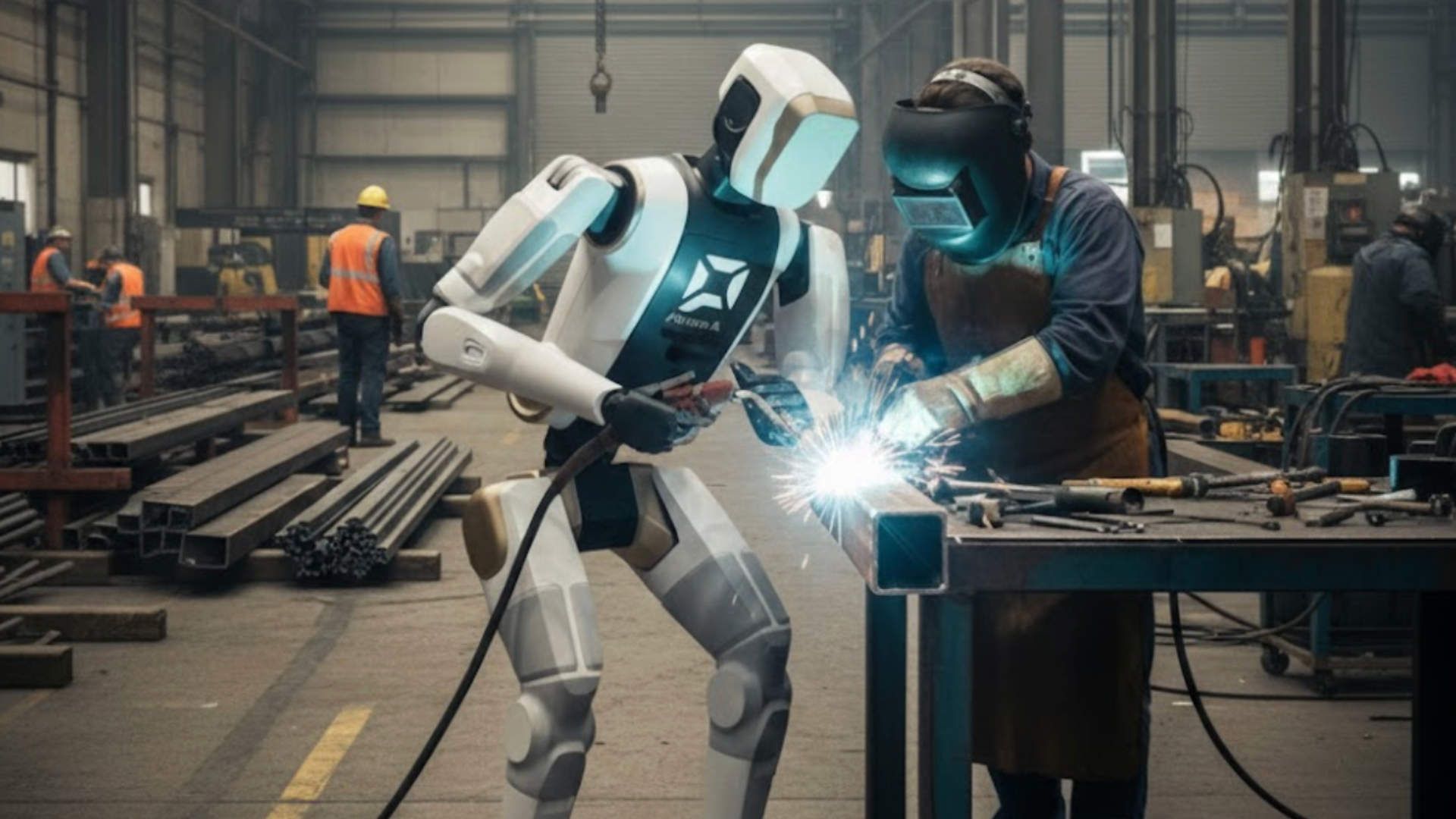
BEIJING — A “robot kindergarten” opened Tuesday in Beijing’s Shijingshan district, built so humanoid robots can learn by touch and trial and error instead of copying every human demonstration.
Photo courtesy of Tashan Technology / Global Times.
The facility is a joint project of Chinese tactile-sensing company Tashan Technology and a research team led by Richard Sutton, the Turing Award–winning pioneer of reinforcement learning. Global Times reporters watched robots at the site repeat movements, take feedback from physical contact, and change what they did next. If a robot hits a wall while learning to walk, the collision becomes data. It records what happened, tries again, and adjusts.
Sutton, speaking at the opening, said the goal is a safe place for robots to learn their own bodies and the physical world through experience. That takes new algorithms, he said, plus robots and rooms designed for learning. Failures will be part of the process, and researchers will have to iterate the same way the machines do.
Tashan Technology CEO Ma Yang said the kindergarten lets robots learn through touch in a controlled environment. Beijing authorities and state-owned Shougang Group backed the project; Ma said it opened 37 days after the plan was announced.
China has already built humanoid training sites in Yizhuang and Shijingshan that recreate factory and household work, mostly from human demos, teleoperation, or motion capture. The kindergarten asks a different question: whether robots can keep learning after those demos run out. Kris De Asis, a senior researcher at Openmind Global Research, told Global Times that most robots today freeze their skills after training. Continuous learning would let them adapt to objects and situations they never saw. It is slower than imitation, he said, but the tradeoff is long-term versus near-term. Hardware is the bottleneck: “If it can’t make a mistake, then it can’t learn.”
A small spider-like robot at the facility learned to move forward in about 40 minutes with no prior knowledge, De Asis said. Humanoids are a harder problem, involving balance, energy, temperature, and self-defense. For now, autonomous learning is more likely to sit beside teleoperation, imitation, and simulation than replace them.
Reporting is based on Global Times coverage of the September 1 opening: https://www.globaltimes.cn/page/202609/1369570.shtml